best sopa criolla near me
There’s something deeply comforting about a steaming bowl of sopa criolla, and if you’ve typed “best sopa criolla near me” into Google, you’re already on the hunt for that perfect bowl. This Peruvian noodle soup, with its tomato-tinged broth, tender beef, and hint of evaporated milk, has quietly built a devoted following across the UK’s growing Latin American food scene. Whether you’re a homesick Peruvian expat or a curious food lover discovering South American cuisine for the first time, finding an authentic version isn’t always straightforward. This article walks you through everything you need to know: what makes sopa criolla special, how to spot the real deal, where to look, and what else to try once you’re there. By the end, you’ll know exactly how to track down a bowl worth your time.
What Makes an Authentic Sopa Criolla Worth Seeking Out
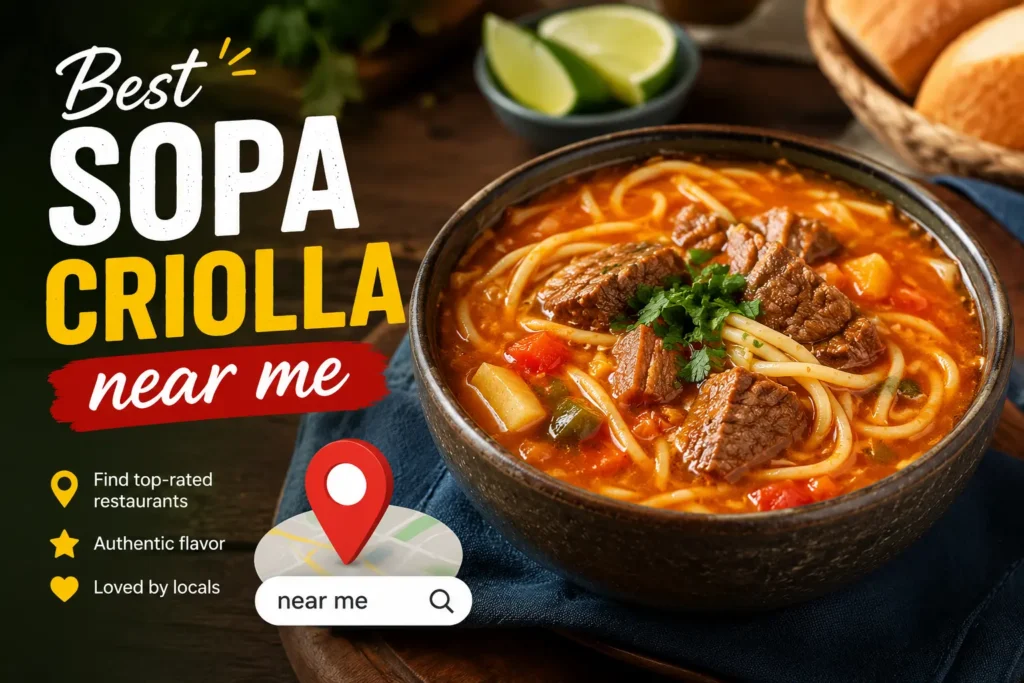
Sopa criolla isn’t just another noodle soup; it’s a dish rooted in Peru’s coastal culinary tradition, blending Italian pasta influences with distinctly Andean and criollo flavours. The broth is built on a base of sautéed onions, garlic, and tomato paste, simmered until it reaches a rich, slightly sweet depth that sets it apart from other Latin American soups. What makes it genuinely craveable is the balance: savoury beef, soft angel-hair pasta, a poached egg, and a generous splash of evaporated milk that rounds out the acidity of the tomato.
When searching for the best sopa criolla near me, authenticity matters more than presentation. A truly great version won’t necessarily look photogenic, but it will taste layered, with visible care taken in building the broth rather than relying on shortcuts. Many UK restaurants attempting Latin fusion menus water down the recipe, skipping the evaporated milk or substituting bland stock. The difference is immediately noticeable to anyone who has tasted the dish in Lima or in a Peruvian household kitchen.
Seeking out an authentic bowl also means understanding regional variation. Some cooks add hot dog slices or diced ham, a nod to home-style Peruvian cooking, while others keep it strictly beef-based. Neither version is more “correct,” but knowing this helps you evaluate menus more critically. A restaurant confident enough to offer the traditional garnishes—fresh herbs, a wedge of lime, or ají amarillo on the side—usually signals a kitchen that respects the dish’s roots rather than adapting it purely for a British palate.
Understanding the Dish: Origins and Traditional Ingredients
Sopa criolla traces its history to Peru’s 19th and 20th-century immigration waves, when Italian settlers introduced pasta to coastal Peruvian cooking. Local cooks adapted these noodles into hearty, home-style soups using ingredients already common in Peruvian kitchens: tomatoes, onions, garlic, and beef. Over generations, the dish evolved into a beloved comfort food, often served for lunch or as a remedy for cold weather and hangovers alike, earning it a reputation similar to chicken soup in other cultures.
The defining ingredients are worth knowing before you order. Angel-hair pasta gives the soup its silky texture, while thin strips or cubes of beef add protein and body. Tomato paste forms the backbone of the broth’s colour and flavour, balanced by a touch of sugar or the natural sweetness of simmered onions. Evaporated milk is stirred in near the end of cooking, giving the broth its signature creamy finish without making it heavy. A soft-poached egg, cracked directly into the hot soup, is the finishing touch that transforms it from simple to indulgent.
Because these ingredients are relatively accessible, many Peruvian restaurants in the UK can recreate the dish faithfully, provided the kitchen prioritises technique over speed. Rushed versions often skip the slow reduction of the tomato base, resulting in a thinner, less satisfying broth. Understanding these fundamentals gives you a genuine advantage when comparing menus or reading reviews, since you’ll know precisely what separates a memorable bowl from a mediocre one.
How to Find the Best Sopa Criolla Near Me in the UK
The most reliable starting point is searching specifically for Peruvian restaurants rather than generic “Latin American” or “South American” listings, since many multi-national menus dilute individual national dishes. Cities with established Peruvian communities, including London, Manchester, and parts of the West Midlands, tend to have the highest concentration of dedicated Peruvian kitchens. Google Maps remains one of the most efficient tools here: searching “Peruvian restaurant near me” alongside “sopa criolla” in reviews often surfaces venues where past customers have specifically praised the dish.
Review platforms like TripAdvisor and Google Reviews are particularly useful because diners frequently mention dish names directly. Filtering reviews by recent dates also helps, since menus change and quality can shift with new chefs or ownership. Look for comments referencing the broth’s texture, the presence of a poached egg, or comparisons to homemade versions, as these details usually indicate a reviewer who genuinely understands the dish rather than someone unfamiliar with Peruvian cuisine.
Social media, particularly Instagram and TikTok, has also become a valuable discovery tool, with many independent Peruvian restaurants showcasing their sopa criolla preparation in real time. Searching location-tagged posts or Peruvian food hashtags relevant to your city can reveal smaller, family-run establishments that don’t always rank highly on traditional search engines. These hidden-gem restaurants often serve the most authentic versions, since they cater primarily to the local Peruvian community rather than a broader, less discerning customer base.
Signs of an Authentic Peruvian Kitchen
Beyond the soup itself, the overall menu offers strong clues about a restaurant’s authenticity. A genuine Peruvian kitchen will typically feature other staples like lomo saltado, ají de gallina, or causa alongside sopa criolla, rather than presenting it as an isolated novelty item. This breadth suggests the chef has real grounding in Peruvian cuisine rather than borrowing a single recognisable dish to diversify a generic menu.
Staff knowledge is another telling indicator. Ask about the broth’s preparation or whether the pasta is cooked separately before being added to the soup, a common technique that prevents the noodles from becoming mushy. A knowledgeable server or chef will answer confidently and specifically, while a vague or uncertain response often signals a kitchen less invested in getting the details right. This kind of transparency reflects genuine culinary expertise, which is exactly what search engines and diners alike associate with trustworthy, high-quality food establishments.
Finally, pay attention to sourcing. Restaurants that import specific Peruvian ingredients, such as ají amarillo paste or particular herbs, generally demonstrate a stronger commitment to authenticity than those relying entirely on generic substitutes. While some adaptation is inevitable given UK ingredient availability, a kitchen that clearly prioritises sourcing the right components will almost always produce a more faithful, satisfying bowl of sopa criolla.
What to Expect on the Menu Alongside Sopa Criolla
Once you’ve found a promising restaurant, it helps to know what typically accompanies sopa criolla on a well-rounded Peruvian menu. Ceviche is often the headline dish, showcasing fresh fish cured in citrus, and its presence alongside sopa criolla is a strong sign the kitchen handles both cold and hot preparations with equal care. Anticuchos, grilled skewers marinated in a smoky spice blend, frequently appear as starters and reflect the same attention to layered flavour that a good sopa criolla requires.
Side dishes and accompaniments matter too. Look for options like arroz con pollo, papa a la huancaína, or fresh Peruvian breads, which round out a meal and indicate a kitchen capable of handling multiple traditional recipes simultaneously. Beverage pairings are worth exploring as well; chicha morada, a purple corn drink, or a classic pisco sour often complement the richness of sopa criolla beautifully, enhancing the overall dining experience rather than simply filling out the menu.
Dessert offerings can also hint at authenticity. Restaurants serving suspiro a la limeña or picarones alongside their savoury dishes typically demonstrate a fuller commitment to Peruvian culinary tradition rather than a narrow, tourist-focused selection. When a menu feels cohesive and thoughtfully curated across courses, it’s a strong signal that the sopa criolla you’re about to order was prepared with the same level of care and cultural respect.
Tips for Ordering and Enjoying Sopa Criolla
Timing your visit can genuinely affect your experience. Many Peruvian restaurants prepare sopa criolla in smaller batches earlier in service, meaning the broth may taste fresher and more vibrant during lunch or early dinner hours rather than late at night when ingredients have been sitting longer. If possible, asking the server how the soup is prepared that day, whether the broth is made fresh or reheated from a larger batch, can help set accurate expectations before ordering.
When the bowl arrives, take a moment to observe before diving in. The broth should appear glossy rather than watery, with visible strands of pasta and a poached egg sitting just below the surface, still slightly runny when broken. A light garnish of fresh coriander or parsley, along with a lime wedge on the side, often enhances the dish’s brightness. Squeezing the lime just before eating cuts through the richness of the evaporated milk, creating the balanced flavour profile that defines a well-executed sopa criolla.
Pacing yourself matters too, since this is a hearty, filling dish best enjoyed slowly. Rushing through it means missing the way the flavours evolve as the egg yolk mixes into the broth, thickening it slightly and deepening the overall taste. If you’re new to Peruvian cuisine, consider pairing your soup with a smaller starter rather than a large main course, allowing you to fully appreciate the soup without feeling overwhelmed by portion size.
Making Sopa Criolla at Home vs Dining Out
For those who can’t immediately find the best sopa criolla near me in their area, attempting a homemade version is a reasonable alternative, though it comes with trade-offs. Recreating the dish requires access to specific ingredients like ají amarillo paste and evaporated milk, both increasingly available in UK supermarkets or Latin American grocery stores. However, achieving the correct broth consistency takes practice, and many home cooks find their first few attempts either too thin or overly sweet compared to restaurant versions.
Dining out offers clear advantages beyond convenience. Professional kitchens typically simmer their broths longer, developing a depth of flavour that’s difficult to replicate in a home setting without significant time investment. Additionally, restaurants often have access to higher-quality or more traditional ingredients sourced specifically for Peruvian dishes, giving them an edge in authenticity that casual home cooking usually can’t match, particularly for first-time preparers unfamiliar with the technique.
That said, cooking sopa criolla at home can be a rewarding way to deepen your appreciation for the dish between restaurant visits. Understanding the process, from building the tomato base to timing the poached egg correctly, makes you a more discerning diner when you do eat out. Many food enthusiasts find that alternating between homemade attempts and restaurant visits offers the best of both worlds, combining hands-on learning with the reliable quality of an experienced kitchen.
Final Thoughts on Finding Your Perfect Bowl
Tracking down the best sopa criolla near me ultimately comes down to knowing what authenticity looks and tastes like, then using the right tools to find it. From understanding the dish’s Italian-Peruvian origins to recognising the telltale signs of a kitchen that genuinely respects tradition, you’re now equipped to search smarter rather than settling for the first Latin American restaurant that appears in a quick search. Reviews, menu breadth, and staff knowledge all serve as reliable indicators pointing you toward a truly satisfying bowl.
Whether you discover your favourite spot through a well-reviewed Peruvian restaurant in London, a hidden family-run gem found through social media, or eventually attempt the recipe yourself at home, the goal remains the same: a warm, comforting bowl that captures the true spirit of Peruvian home cooking. Sopa criolla rewards patience, both in its preparation and in the search for the right place to enjoy it. With the guidance in this article, you’re well-positioned to find a version that genuinely lives up to the craving that brought you here in the first place.