
Construction projects regularly face challenges related to excess material use, damaged materials, and inefficient planning. Material waste not only increases project costs but also impacts productivity, timelines, and environmental sustainability.
Every unused piece of concrete, lumber, metal, or finishing material represents wasted funding that would have been avoided with better guidance. Builders who concentrate on decreasing waste can improve project profitability while preserving better environmental standards.
With accurate planning, improved communication, and current technology, production groups can control material utilization more successfully.
A properly organized construction process starts before materials arrive on-site. Proper drawings, correct measurements, and particular planning permit developers to become aware of potential waste regions early.
As the development enterprise turns into more competitive, waste reduction has become an important part of a success undertaking control. Builders who undertake smarter waste reduction strategies can lessen expenses, improve efficiency, and attain higher undertaking consequences.
This article explains practical material waste reduction strategies that each builder needs to put in place to create more value-effective and sustainable production initiatives.
Understanding Material Waste Challenges
Material waste is one of the most common problems affecting production budgets. Poor calculations, faulty ordering, layout adjustments, and incorrect dealing with can bring about enormous economic losses.
Before production starts offevolved, cautious evaluation of project requirements is essential to determine the precise quantity of materials needed. Accurate planning prevents excessive purchases and decreases the possibility of unused resources.
Construction estimators analyze drawings, specs, and undertaking information to put together correct material calculations. Their know-how allows contractors to make knowledgeable shopping choices and keep away from expensive errors throughout production.
Many waste issues arise because materials are ordered without thinking about real task needs. A detailed approach helps developers maintain higher control over assets from the start.
Common causes of material waste include:
- Incorrect quantity calculations
- Poor storage and handling strategies
- Frequent design changes
- Lack of coordination between teams
Ordering materials without proper planning
The Importance of Accurate Quantity Takeoffs for Waste Reduction
Quantity takeoffs are a crucial step in controlling material usage. They permit contractors to determine the exact amount of materials required based on design drawings and specifications.
Accurate takeoffs assist in reducing needless purchases and ensure that materials are to be had when wanted. This improves workflow performance and prevents delays resulting from missing materials.
Modern digital takeoff tools have made this process faster and more accurate. This technology allows teams to identify measurement mistakes before materials are ordered.
Benefits of correct quantity takeoffs include:
- Better fabric shopping selections
- Reduced leftover materials
- Improved financial management
- Fewer project delays
- More accurate bidding procedures
Improving Project Coordination Through a CAD
Clear conversation between architects, engineers, contractors, and providers performs a chief position in lowering construction waste. Misunderstandings and previous facts frequently result in incorrect material utilization.
A expert CAD Drafter creates detailed drawings that provide accurate visual statistics approximately undertaking dimensions, layouts, and production requirements. These drawings help teams understand precisely what needs to be constructed.
Updated digital drawings also permit contractors to identify design conflicts earlier than production starts offevolved. This reduces rework, prevents fabric waste, and improves overall project performance.
Effective coordination strategies consist of:
- Sharing up-to-date drawings with all teams
- Reviewing designs before construction begins
- Communicating modifications right away
- Maintaining proper assignment documentation
- Using virtual collaboration structures
Smart Material Storage and Handling Practices
Even when materials are as envisioned, negative storage practices can create unnecessary waste. Exposure to moisture, weather conditions, and improper handling can damage costly production components.
Builders have to arrange storage regions cautiously and guard materials till they’re equipped for installation. Proper inventory control additionally helps employees use available substances correctly.
For example, protecting lumber from moisture prevents warping, while proper cement storage avoids product harm. Simple enhancements in handling can create big savings.
Effective storage methods consist of:
- Keeping substances blanketed from weather
- Labeling stored resources well
- Monitoring inventory often
- Training employees on safe handling
- Using materials consistent with mission phases
Using Technology to Minimize Construction Waste
Technology has transformed how builders manipulate sources and control waste. Digital solutions provide better accuracy, communication, and project visibility.
Tools that include Building Information Modeling (BIM), digital takeoff systems, and inventory software permit teams to monitor material requirements more effectively.
These technologies help perceive capability issues before they come to be high-priced mistakes. By the use of accurate undertaking statistics, builders can lessen waste and enhance selection-making.
Useful technologies consist of:
- BIM modeling software
- Digital size equipment
- Cloud-based project management systems
- Inventory monitoring structures
- Automated reporting solutions
Working With Suppliers for Better Material Control
Supplier coordination is another important issue in decreasing waste. Ordering too many materials or receiving elements too early can create storage issues and unnecessary losses.
Builders should work closely with providers to timetable deliveries in line with undertaking development. This guarantees materials arrive when required and reduces the chance of damage.
Strong supplier relationships additionally make it less complicated to manage unused materials, replacements, and sudden project modifications.
Supplier management practices consist of:
- Planning delivery schedules carefully
- Checking materials upon arrival
- Avoiding needless bulk orders
- Maintaining provider communication
- Tracking fabric utilization
How Professional Services Improve Material Efficiency
Reducing fabric waste calls for accurate calculations, precise planning, and industry know-how. Many contractors use professional help to enhance task accuracy and manipulate charges.
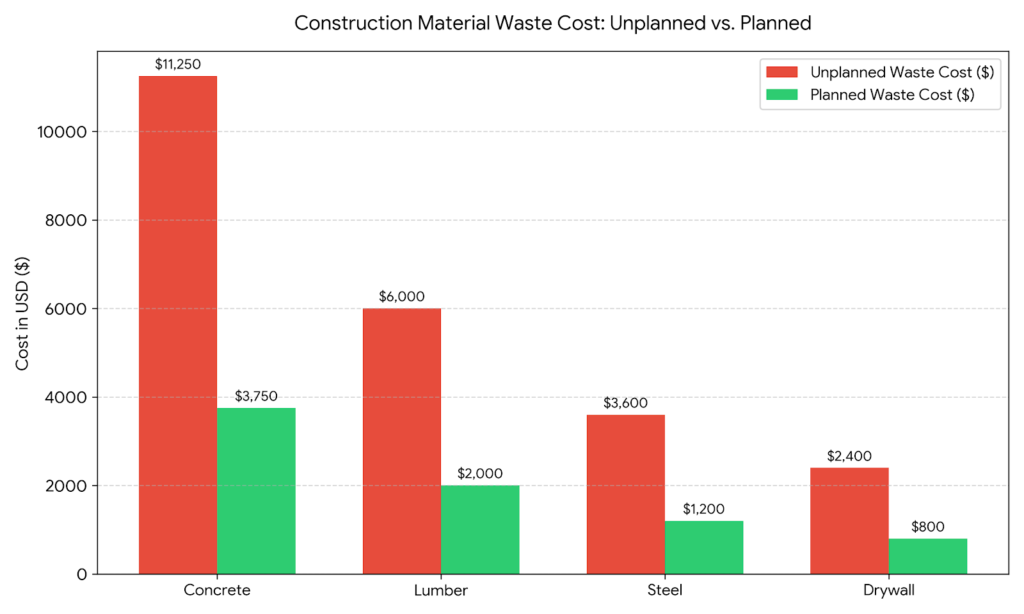
| Material | Quantity Wasted (Unplanned) | Waste Cost (Unplanned) | Quantity Wasted (Planned) | Waste Cost (Planned) | Potential Savings | Waste Reduction |
| Lumber | 1,500 LF | $6,000 | 500 LF | $2,000 | $4,000 | 66.7% |
| Concrete | 75 CY | $11,250 | 25 CY | $3,750 | $7,500 | 66.7% |
| Drywall | 1,200 SQ FT | $2,400 | 400 SQ FT | $800 | $1,600 | 66.7% |
| Steel | 3 Tons | $3,600 | 1 Ton | $1,200 | $2,400 | 66.7% |
| Total | — | $23,250 | — | $7,750 | $15,500 | 66.7% |
Caption: Example showing how accurate planning reduces material waste and saves project costs.
Professional Construction Estimating Services Pennsylvania offers distinct material calculations, fee evaluation, and project reviews that assist builders in making better choices. These services reduce over-ordering, enhance budgeting accuracy, and help with more efficient construction planning.
By combining expert expertise with superior technology, contractors can reduce waste while enhancing project profitability and overall performance.
Read more: How Much Does LVP Flooring Cost in 2026?
Final Thoughts
Material waste reduction isn’t always only about saving materials; it is about growing a greener production method. Proper planning, correct calculations, and better communication assist builders manipulate prices and enhance mission outcomes.
As construction tasks become more complicated, waste management will continue to play a critical role in profitability and sustainability. Builders who put money into smarter planning techniques can lessen prices while delivering excellent projects.
FAQs
1. What causes the most material waste in construction?
The most common causes encompass faulty measurements, bad planning, wrong storage, design changes, and inefficient material handling.
2. How can developers lessen material waste earlier than construction starts?
Builders can lessen waste by using accurate amount takeoffs, reviewing drawings carefully, and planning fabric purchases based on actual venture necessities.
3. Why are digital tools useful for controlling construction waste?
Digital tools enhance accuracy, lessen measurement errors, guide better communication, and assist teams in monitoring material utilization.
4. How does a CAD Drafter assist in reducing waste?
A CAD Drafter creates accurate drawings that assist contractors in understanding task requirements, avoiding mistakes, and reducing unnecessary rework.
5. Can expert estimating help enhance project profitability?
Yes, expert estimating helps contractors prepare correct material calculations, control fees, and minimize waste during the project.