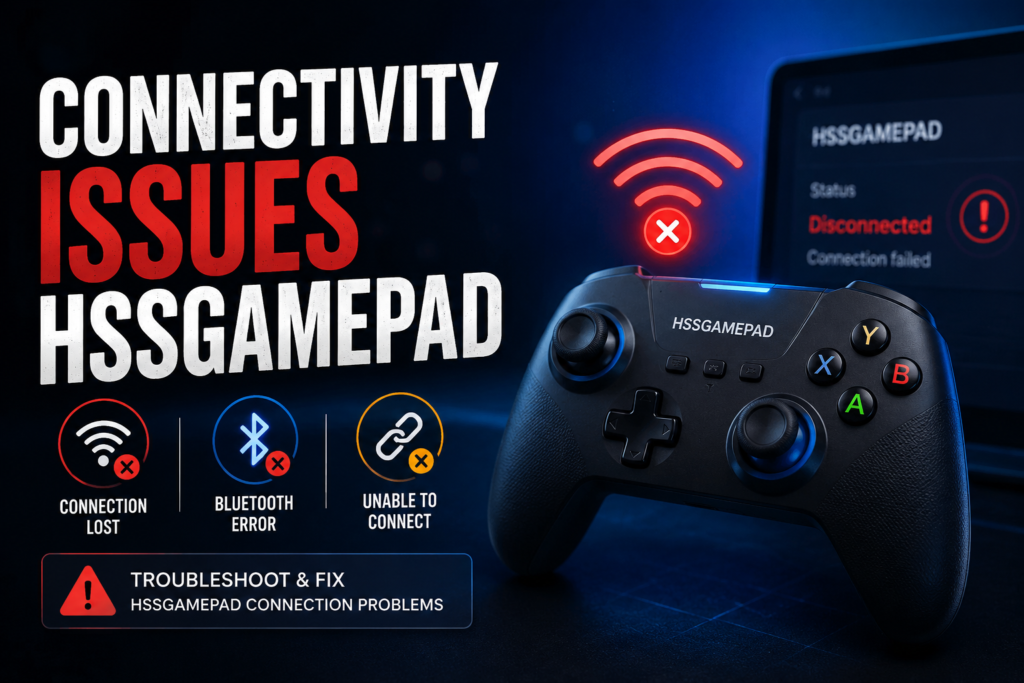
Connectivity Issues HSSGamepad
Experiencing connectivity issues hssgamepad can quickly turn an enjoyable gaming session into a frustrating experience. Whether your controller refuses to pair, disconnects during gameplay, suffers from input delay, or is not detected by your PC, smartphone, or console, these problems are usually fixable with the right approach.
This guide explains the most common causes of connectivity issues hssgamepad and provides practical solutions that help restore a stable connection. By following the troubleshooting methods below, you can improve performance, reduce interruptions, and get back to gaming with confidence.
Understanding Connectivity Issues HSSGamepad
Modern gamepads rely on either Bluetooth, USB, or wireless adapters to communicate with gaming devices. Any interruption in this communication can cause pairing failures, delayed inputs, unexpected disconnections, or complete connection loss.
Most connectivity problems are not caused by hardware failure. Instead, outdated software, Bluetooth conflicts, incorrect settings, weak batteries, or driver issues are often responsible for unstable performance.
Common Symptoms of Connectivity Issues HSSGamepad
Players experiencing connectivity issues hssgamepad often notice similar warning signs. The controller may repeatedly disconnect during gameplay or fail to appear in the list of available Bluetooth devices. Some users experience delayed button responses, while others find that their controller charges correctly but refuses to establish a connection.
Another common symptom is random input freezing, where buttons stop responding for several seconds before functioning normally again. These signs usually indicate communication problems rather than permanent hardware damage.
Why Connectivity Problems Occur
Several factors can contribute to unstable controller performance. Wireless interference is among the most common causes, especially in environments with numerous Bluetooth devices, Wi-Fi routers, and wireless accessories operating simultaneously.
Software incompatibilities also play a significant role. Operating system updates, outdated controller firmware, or incompatible drivers may prevent the controller from functioning properly.
Power-related issues should not be overlooked either. Low battery levels can reduce wireless stability and increase unexpected disconnects during gameplay.
Check the Battery First
Before attempting advanced troubleshooting, verify that the controller has sufficient battery power. Many connection problems are simply the result of an almost depleted battery.
Allow the controller to charge fully using the recommended charging cable. After charging, restart the controller and attempt pairing again. A fully charged battery often restores consistent wireless communication.
Restart Both Devices
Restarting both the controller and the connected device can eliminate temporary software glitches affecting communication.
Turn off the controller completely before shutting down your PC, smartphone, tablet, or gaming console. Wait a short period before restarting everything and attempting to reconnect. This simple process refreshes Bluetooth services and clears temporary system errors.
Fix Bluetooth Pairing Problems
Bluetooth pairing failures are among the most frequent connectivity issues hssgamepad users encounter.
Remove any existing pairing records from your device before reconnecting. Many operating systems store outdated Bluetooth profiles that interfere with future connections.
After deleting the previous pairing, place the controller into pairing mode according to its instructions and search for available Bluetooth devices again. Completing a fresh pairing often resolves recognition problems.
Reduce Wireless Interference
Wireless signals can become unstable when multiple electronic devices compete for the same frequencies.
Keep the controller within a reasonable distance of the connected device. Avoid placing large metal objects between the controller and receiver, as they may weaken the signal.
If possible, temporarily disconnect unnecessary Bluetooth devices nearby to determine whether interference is contributing to connectivity issues.
Update Device Drivers
Computers depend on accurate Bluetooth and USB drivers to communicate effectively with gaming controllers.
Visit your operating system’s update settings and install the latest available Bluetooth, chipset, and USB drivers. Updated drivers frequently improve compatibility with modern wireless controllers and fix previously reported connection bugs.
After updating, restart your computer before testing the controller again.
Update Controller Firmware
Some HSSGamepad models support firmware updates that improve connection reliability and overall performance.
Firmware updates may include fixes for Bluetooth stability, compatibility improvements, battery optimization, and reduced input latency. If firmware updates are available for your controller model, installing the latest version is recommended before attempting further troubleshooting.
Check USB Connections
If you’re using a wired connection, inspect the USB cable carefully. Damaged cables or loose connectors often cause intermittent disconnections.
Try connecting the controller to a different USB port. Switching from a USB hub directly to a motherboard port can also improve stability since direct ports usually provide more reliable power and data transfer.
Testing another compatible cable helps determine whether the original cable is defective.
Verify Device Compatibility
Not every controller works identically across all platforms. Certain operating systems or gaming devices may require additional configuration before recognizing the controller correctly.
Ensure your version of HSSGamepad supports the platform you’re using. Compatibility limitations can sometimes appear after major operating system updates until software patches become available.
Checking compatibility before extensive troubleshooting can save considerable time.
Resolve Input Lag
Input delay often accompanies connectivity issues hssgamepad, especially when using Bluetooth.
Move closer to the receiving device to strengthen the wireless signal. Closing unnecessary background applications can also reduce processing delays that affect controller responsiveness.
When available, switching temporarily to a wired USB connection helps determine whether Bluetooth interference is causing the latency.
Reset the Controller
A factory reset can eliminate configuration errors accumulated over time.
Resetting restores the controller’s original settings and removes problematic pairing information. After the reset, pair the controller again as though it were connecting for the first time.
Many persistent connection problems disappear after performing a proper reset.
Check Operating System Updates
Operating systems frequently release updates that improve hardware compatibility and Bluetooth performance.
Installing the latest system updates ensures your device includes recent security patches, driver improvements, and wireless communication enhancements.
After updating, restart your device before reconnecting the controller.
Avoid Overloaded Bluetooth Connections
Many computers and mobile devices can technically connect to multiple Bluetooth accessories at once. However, excessive simultaneous connections may reduce stability.
Disconnect unused wireless keyboards, speakers, headphones, or other accessories while gaming. Reducing Bluetooth traffic allows the controller to maintain a stronger and more consistent connection.
Test the Controller on Another Device
One effective way to diagnose connectivity issues hssgamepad is to connect the controller to another compatible device.
If it works correctly elsewhere, the problem likely exists with the original computer or console rather than the controller itself.
Conversely, if connection problems appear across multiple devices, the controller may require servicing or replacement.
Prevent Future Connectivity Problems
Preventive maintenance helps maintain consistent controller performance over time.
Keep firmware and operating system software updated whenever possible. Recharge the controller before long gaming sessions and store it in a dry, dust-free environment.
Using quality charging cables and avoiding physical impacts also extends the controller’s lifespan while reducing unexpected connection failures.
When Hardware Failure May Be the Cause
Although software problems are more common, physical hardware damage can occasionally cause persistent connectivity failures.
Signs of hardware issues include broken USB ports, damaged charging connectors, internal battery failure, or Bluetooth modules that never activate despite multiple troubleshooting attempts.
If every recommended solution fails across several devices, professional repair or controller replacement may be necessary.
Conclusion
Most connectivity issues hssgamepad are caused by pairing errors, outdated drivers, Bluetooth interference, software conflicts, or low battery levels rather than permanent hardware damage. Working through each troubleshooting step methodically can restore reliable performance in most situations.
Keeping firmware updated, maintaining a strong wireless signal, using quality cables, and regularly restarting connected devices are simple habits that help prevent future connection problems and ensure a smoother gaming experience.