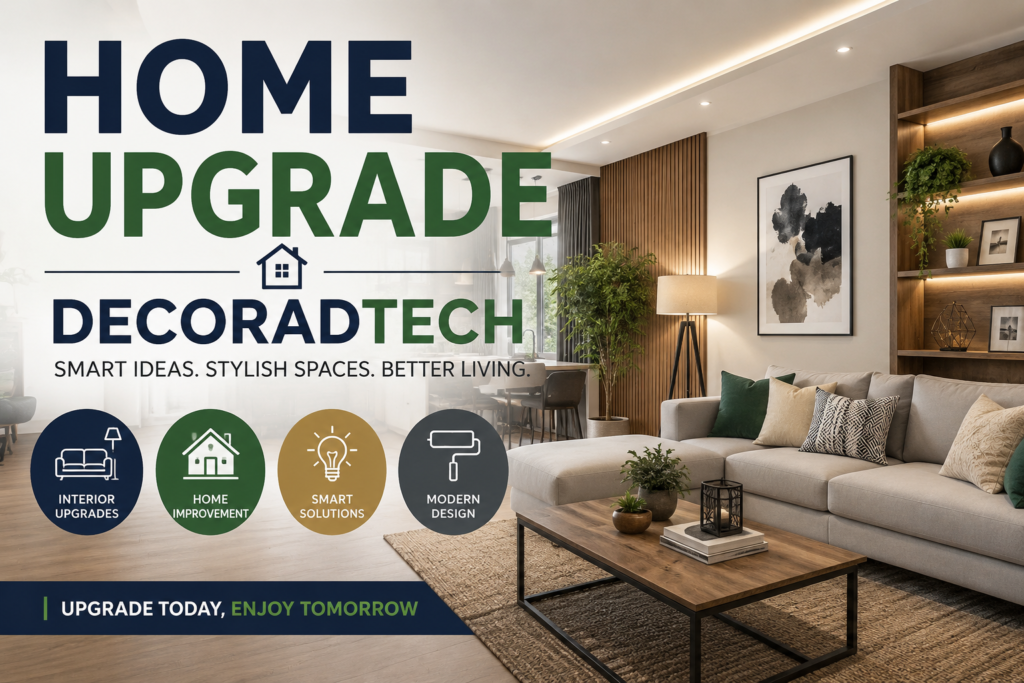
Home upgrade decoradtech
In an era where our living spaces must work harder than ever, the fusion of interior aesthetics and intelligent technology has become the defining trend in British property improvement. The concept of home upgrade decoradtech represents a fundamental shift away from treating smart devices as clunky additions, moving towards an integrated approach where technology enhances the beauty of a room rather than detracting from it. Homeowners across the United Kingdom are increasingly rejecting the stark, utilitarian look of early smart home gadgets in favour of solutions that complement their bespoke interiors. This architectural and design evolution means that upgrading your property no longer requires a compromise between form and function. By embracing this seamless blend, you can orchestrate your lighting, climate, and security systems while maintaining the exact visual atmosphere you have worked so hard to cultivate.
Throughout this comprehensive guide, we will explore the various facets of this design revolution, detailing how you can implement sophisticated technological enhancements without sacrificing an ounce of style. We will delve into the specific elements that constitute a successful integration, from hidden speakers and bespoke smart lighting to intelligent climate control disguised as traditional radiators. Furthermore, we will examine the practical steps required to plan and execute these upgrades within the unique constraints of UK housing stock, considering everything from period property sensitivities to modern apartment living. Whether you are undertaking a complete renovation or simply looking to refresh a single room, understanding the principles of this movement will empower you to make informed decisions that yield lasting satisfaction.
The ultimate goal of mastering home upgrade decoradtech is to create environments that anticipate your needs and respond to your presence without you ever having to reach for a smartphone or remote control. It is about crafting an invisible layer of convenience and comfort that operates quietly in the background, allowing the physical beauty of your home to take centre stage. As we navigate the following sections, you will discover how to achieve this delicate balance, transforming your house into a forward-thinking sanctuary that perfectly marries cutting-edge innovation with timeless British design sensibilities. Let us begin by looking at the foundational philosophy that makes this all possible.
Understanding The Decoradtech Design Philosophy
The fundamental principle behind this modern design movement is the absolute eradication of visual clutter, ensuring that technology serves the space rather than dominating it. In the past, integrating smart home technology often meant accepting an array of bulky hubs, exposed wires, and plastic sensor boxes that clashed horribly with traditional or even contemporary decor. The decoradtech philosophy flips this paradigm completely, demanding that every technological element be either completely concealed or beautifully redesigned to look like a piece of art or premium architectural hardware. This approach requires designers and homeowners to think holistically from the very beginning of a project, planning electrical runs and network infrastructure with the same meticulous care usually reserved for selecting fabrics and finishes.
At its core, this philosophy recognises that true luxury in the modern age is not about having the most visible gadgets, but about experiencing the most effortless comfort. When a room’s lighting adjusts automatically to complement the natural light streaming through the windows, or when an invisible speaker system fills the room with high-fidelity sound, the technology transcends its physical form. It becomes an ambient experience that elevates the mood and utility of the room without ever reminding you of the complex engineering operating behind the scenes. This level of sophistication appeals deeply to the British sensibility, which traditionally favours understated elegance and quiet quality over loud, ostentatious displays of wealth or modernity.
Adopting this mindset also fundamentally changes how we view the longevity and value of our interior design investments. By embedding technology directly into the fabric of the home—through smart switches, hidden sensors, and integrated displays—we future-proof our properties in a way that standalone devices simply cannot achieve. A beautifully crafted smart thermostat or a bespoke media wall built to hide a massive television adds genuine, tangible value to a property, making it highly attractive to future buyers who expect modern conveniences. Ultimately, understanding this philosophy is the first vital step toward executing a home upgrade decoradtech strategy that feels cohesive, intentional, and profoundly transformative.
Invisible Audio And Entertainment Systems
The integration of high-performance audio and visual entertainment into the home has historically been one of the biggest challenges for interior designers, but decoradtech offers an elegant solution. Gone are the days when achieving cinematic sound required massive black speaker boxes dominating the corners of a living room or unsightly trailing wires ruining the clean lines of a carefully curated space. Today, acoustic technology has advanced to the point where premium sound can be delivered through entirely invisible speakers embedded directly into walls and ceilings. These ingenious devices use the plasterboard or drywall surface as their speaker cone, projecting immersive, room-filling sound without a single visible grille or component to disrupt the visual flow of the room.
Visual entertainment has undergone a similar transformation, moving away from the ubiquitous black rectangle that traditionally acts as the focal point of a living space. The advent of bespoke media walls allows homeowners to frame their televisions within beautiful joinery, effectively turning the screen into just another element of a larger architectural feature. When the television is switched off, it can either vanish behind sliding wooden or fabric panels or display bespoke artwork that seamlessly mimics the texture and palette of the surrounding room. This approach ensures that the social hub of the British home remains focused on conversation and connection, with the technology only revealing itself when it is explicitly needed for entertainment.
Furthermore, the routing of the necessary cabling for these entertainment systems is now handled with the precision of fine cabinetry, ensuring that no wires are ever exposed to break the illusion of a technology-free environment. Deep skirting boards, purpose-built conduits, and wireless transmission protocols mean that the heavy lifting of a high-end entertainment setup happens entirely out of sight. By prioritising invisible audio and cleverly concealed visual displays, a home upgrade decoradtech strategy ensures that your living spaces remain serene, uncluttered, and utterly devoted to aesthetic excellence, whilst still delivering the thrilling performance of a state-of-the-art cinema room.
Smart Lighting As A Central Design Element
Lighting has always been a critical tool in the interior designer’s arsenal, but the advent of smart lighting technology has elevated it from a simple utility to a dynamic, interactive design feature. Within the context of home upgrade decoradtech, smart lighting is not just about being able to turn lights on with your voice; it is about using light to sculpt the atmosphere of a room throughout the day. By utilising tunable white bulbs and sophisticated LED strips hidden within architectural details, homeowners can mimic the natural progression of sunlight, promoting better circadian rhythms and creating a profoundly comforting environment. This biophilic approach to artificial lighting helps to ground our indoor spaces in the natural world, a particularly appealing concept during the dark, grey winter months typical of the United Kingdom.
The physical fixtures themselves have also evolved to support this seamless integration, moving far beyond standard plastic switches and basic pendant lights. Decorative smart switches are now available in a stunning array of premium materials, including brushed brass, matte concrete, and natural oak, allowing them to blend effortlessly into high-end interior schemes. Recessed perimeter lighting, hidden within coving or under floating furniture, provides a wash of ambient illumination that eliminates harsh shadows and gives the illusion of greater spatial volume. These architectural lighting techniques transform a plain room into a multi-layered, three-dimensional experience, where light is used to highlight textures, define zones, and guide the eye toward the room’s most beautiful features.
Controlling these complex lighting scenes is now an intuitive and aesthetically pleasing experience, thanks to the rise of elegant, flush-mounted touch panels that replace the clutter of multiple traditional light switches. Instead of a row of plastic toggles, a single minimalist glass or metal panel can control every light in the room, offering pre-set scenes for entertaining, relaxing, or working. When combined with motion sensors hidden within the fabric of the room, the lighting system can gently guide you through your home at night, illuminating the floor just enough to navigate safely without shocking your eyes with bright overhead glare. This sophisticated orchestration of light is a cornerstone of modern decoradtech, proving that technology can indeed enhance the poetic beauty of a well-designed space.
Intelligent Climate Control And Comfort
Managing the temperature and air quality within a home is an essential aspect of comfort, yet traditional heating solutions often present an eyesore that disrupts a carefully planned aesthetic. The decoradtech approach to climate control involves selecting and integrating systems that perform flawlessly while maintaining the visual integrity of the interior. In the United Kingdom, where central heating is a necessity, this often means replacing standard white panel radiators with bespoke alternatives that look like pieces of modern sculpture or traditional cast-iron heritage models. Furthermore, smart thermostats have been completely reimagined by leading designers, shedding their bulky plastic shells in favour of sleek, digital displays framed in anodised aluminium or ceramic that proudly sit on the wall like a piece of functional art.
Beyond the visual appeal of the hardware, the true magic of an intelligent climate system lies in its ability to operate autonomously and efficiently, learning the daily rhythms of your household. Advanced algorithms monitor the weather forecast outside, the insulation levels of your specific property, and the occupancy of individual rooms to deliver heat exactly where and when it is needed. This eliminates the wasteful practice of heating empty rooms and prevents the uncomfortable temperature fluctuations associated with older, manual timer systems. By maintaining a perfectly stable environment, the technology creates a sense of effortless luxury, ensuring that you never walk into a freezing cold room or wake up in the middle of the night feeling overly hot.
Air quality is another vital component of indoor comfort that has been seamlessly integrated into modern decoradtech solutions, moving beyond simple temperature regulation. Discreet ventilation systems can be installed within walls or ceilings to constantly extract stale air, cooking odours, and excess moisture, replacing it with fresh, filtered air without the noise and draughts of opening windows. These systems are particularly valuable in modern, highly insulated British homes, which are prone to issues with condensation and poor air circulation if not properly managed. By hiding the mechanics of purification and ventilation within the architecture, homeowners can enjoy a pristine, healthy indoor climate without sacrificing an inch of their interior design vision.
Concealed Security And Privacy Solutions
Security is a primary concern for any homeowner, but historically, robust security measures have come at a significant aesthetic cost, making properties feel like fortified compounds rather than relaxing sanctuaries. The home upgrade decoradtech movement has completely redefined this category, offering protection that is virtually undetectable to the casual observer. Traditional bulky alarm boxes on the exterior of a house have been replaced by sleek, low-profile sensors that blend into the brickwork or sit discreetly under the eaves. Similarly, outdoor security cameras are now designed to look like subtle architectural elements or high-end outdoor lighting fixtures, ensuring that your home remains secure without looking aggressively defended or unwelcoming to guests.
Indoor security and privacy features have undergone an equally impressive transformation, focusing on discreet monitoring and seamless access control. Door and window sensors are now tiny enough to be hidden entirely within the frame, while smart locks are available in a multitude of premium finishes that match the interior door furniture perfectly. Perhaps the most impactful innovation in this space is the rise of smart glass technology, which can switch from completely transparent to opaque frosted glass at the touch of a button. This provides instant privacy for bathrooms, home offices, or street-facing ground-floor windows without the need for cumbersome blinds or curtains, maintaining clean lines and maximising natural light when privacy is not required.
The integration of these security elements into a unified smart system means that they operate silently in the background, providing peace of mind without requiring constant interaction or visual reminders of their presence. You can arm your home, lock all doors, and activate perimeter lighting simply by saying goodnight or leaving the house, with the system intelligently distinguishing between your family, your pets, and potential intruders. This invisible shield of protection allows the interior design of your home to remain the star of the show, proving that you do not have to compromise on style or live in an environment that feels overly mechanised just to keep your family and possessions safe.
Automated Window Dressings And Blinds
Window dressings play a pivotal role in defining the character of a room, offering control over light, privacy, and thermal efficiency, but manually operating heavy curtains or awkward blinds can be a constant frustration. Integrating automated window treatments is a highly effective way to elevate the practicality of your home while adding a distinct touch of modern luxury. The motors and cabling required for these systems are now so compact that they can be easily hidden within the pelmet or the header rail of the blind itself. This means that whether you choose sumptuous floor-to-ceiling velvet drapes, minimalist linen roller blinds, or sleek wooden Venetians, the physical appearance remains completely untouched by the technology operating silently behind the scenes.
The functional benefits of automated blinds extend far beyond simple convenience, playing a crucial role in the overall energy management and comfort of a modern British home. By linking the blinds to a smart home system, they can be programmed to close automatically during the hottest part of the day in the summer, preventing the greenhouse effect and keeping indoor temperatures comfortably cool without relying heavily on air conditioning. Conversely, in the winter months, the blinds can open automatically as soon as the sun rises, allowing free, passive solar heat to warm the living spaces while you are still waking up. This intelligent, automated response to the weather not only reduces your energy bills but also protects your furniture and flooring from prolonged exposure to damaging UV rays.
The aesthetic integration of these automated systems also allows for incredibly precise control over the mood of a room, which is a fundamental goal of any decoradtech project. Instead of an all-or-nothing approach to light control, automated blinds can be set to precise positions—known as scenes—to perfectly filter the light for different activities, such as watching television, dining, or reading. The slow, whisper-quiet movement of the motors as the blinds adjust adds a kinetic, almost cinematic quality to the room that feels incredibly premium. By removing the need for cords and wands, automated window dressings also present a much cleaner, safer, and more streamlined silhouette, perfectly aligning with the principles of modern, uncluttered interior design.
Smart Furniture And Integrated Surfaces
The final frontier of the decoradtech revolution lies in the furniture and surfaces we interact with every day, which are rapidly evolving from passive objects into active participants in our home environment. Smart furniture goes far beyond a coffee table with a built-in wireless charging pad, encompassing pieces that genuinely adapt to our needs while maintaining the highest standards of craftsmanship and material quality. Imagine a beautifully upholstered sofa that features integrated, heated seat modules controlled via a discreet app, or a dining table with a hidden, motorised extension leaf that glides out smoothly at the touch of a button. These innovations preserve the traditional aesthetic of beloved furniture forms while secretly embedding twenty-first-century convenience into their very DNA.
Kitchen and bathroom surfaces have also been completely reimagined through the lens of this design philosophy, turning functional workspaces into interactive hubs. Kitchen worktops can now be specified with integrated wireless charging zones that are completely invisible beneath the stone or composite surface, allowing you to charge your devices simply by placing them on the counter. In the bathroom, smart mirrors featuring hidden LED lighting, demisting pads, and interactive touch-screen displays can provide the morning news, weather, and calendar updates while you brush your teeth, all without looking like a piece of technology. Once switched off, these mirrors revert to simple, elegant reflective surfaces that complement the sanitaryware perfectly.
The beauty of integrating technology into furniture and surfaces is that it completely removes the need for standalone devices that consume valuable floor and table space. By hiding the mechanics of modern life within the things we already need to have in our homes, we reclaim our rooms for living, relaxing, and entertaining. A bedside table that charges your phone, dims the lights, and wakes you up with a gentle simulated sunrise replaces a cluttered nightstand filled with cables, alarm clocks, and lamps. This holistic approach to home upgrade decoradtech ensures that every element in the room earns its place, contributing to a serene, highly functional environment that feels entirely natural and unforced.
Planning Your Decoradtech Project
Embarking on a journey to integrate technology and design requires meticulous planning and a fundamentally different approach to traditional home renovations. The most critical mistake homeowners make is treating the technology as an afterthought, attempting to retrofit smart devices into a room that has already been designed and decorated. To achieve a truly seamless result, the technological infrastructure must be considered right at the very beginning of the project, sitting alongside the architectural plans and fabric swatches. This means engaging with specialists who understand both interior design and network engineering, ensuring that the necessary cabling, power supplies, and network hubs are planned into the fabric of the building before a single wall is plastered or a floor is laid.
Understanding the specific limitations and quirks of UK housing stock is another vital component of the planning phase, as the solid brick walls of a Victorian terrace or the partition walls of a modern apartment present very different challenges for wireless signals and cable routing. A thorough site survey will identify potential dead zones for Wi-Fi and determine whether wired data connections are required to ensure reliable communication between your smart devices. Furthermore, planning must account for future scalability, ensuring that the hidden conduits and electrical circuits you install today have the capacity to support new technologies that haven’t even been invented yet. This forward-thinking approach protects your investment and ensures your home remains at the cutting edge for decades to come.
Budgeting for a decoradtech project also requires a shift in perspective, moving away from seeing technology as a separate expense and instead viewing it as an integral part of the overall interior design budget. While the initial outlay for bespoke integrated systems is undoubtedly higher than buying off-the-shelf smart gadgets, the longevity, reliability, and aesthetic coherence they provide offer far superior value over time. By carefully prioritising which rooms and which functions matter most to your lifestyle, you can phase the implementation of your strategy, starting with the areas where invisible technology will have the most profound impact, such as the kitchen, living room, or primary bedroom suite.
Working With UK Specialists
Executing a complex home upgrade decoradtech project successfully usually necessitates assembling a carefully selected team of professionals who specialise in this exact intersection of style and technology. While a standard electrician can wire a plug and a standard interior designer can pick out cushions, neither possesses the specific skill set required to hide a complex home automation network within a listed building’s delicate plasterwork. You need to seek out custom installers and technologists who are accredited by recognised industry bodies within the United Kingdom, as these professionals adhere to strict standards of quality and safety. They possess the deep technical knowledge required to ensure that your invisible technology operates flawlessly day after day.
Communication between the interior designer, the architect, and the technology installer is absolutely paramount to the success of the project, requiring a collaborative spirit that transcends traditional industry silos. The designer must understand the physical requirements of the technology, such as the depth needed for a recessed speaker or the ventilation required for a hidden media cabinet, and adapt their designs accordingly. Conversely, the technology installer must respect the aesthetic vision of the designer, suggesting alternative products or installation methods when a proposed piece of equipment threatens to compromise the visual integrity of the space. This constant dialogue ensures that neither form nor function is sacrificed, resulting in a finished home that feels entirely unified and deeply considered.
Choosing to work with dedicated specialists also provides you with the invaluable benefit of ongoing support and aftercare, which is crucial for complex, integrated systems. Unlike a standalone smart bulb that you can easily replace if it fails, an integrated lighting scene or a concealed security system requires professional diagnostics and calibration if something goes wrong. Reputable UK specialists will offer comprehensive warranties, remote monitoring capabilities, and maintenance contracts that give you complete peace of mind. By trusting your vision to experts who live and breathe this discipline, you ensure that the transition from a traditional home to a technologically advanced sanctuary is smooth, stress-free, and ultimately transformative.
The Future Of British Home Interiors
As we look toward the horizon of interior design and domestic technology, it is abundantly clear that the principles of home upgrade decoradtech are not a passing fad but the definitive future of British housing. The trajectory of innovation is moving relentlessly toward greater miniaturisation, increased energy efficiency, and deeper integration with artificial intelligence, all of which will serve to make the technology even more invisible. We are rapidly approaching a time when the concept of a smart home gadget will cease to exist entirely, replaced by intelligent environments that respond to our presence, our mood, and our health needs without requiring any conscious interaction. In this future, the walls, floors, and ceilings of our homes will act as passive facilitators of our comfort and wellbeing.
This evolution will also play a crucial role in addressing pressing environmental concerns, with invisible technology being used to dramatically reduce the carbon footprint of domestic properties across the United Kingdom. Intelligent systems will automatically optimise energy usage, drawing power from solar panels or battery storage at the most efficient times and shutting down phantom loads that waste electricity. As energy prices continue to fluctuate, the ability of a home to manage its own consumption meticulously will become a highly desirable asset, driving the adoption of decoradtech principles from luxury boutique projects into mainstream, everyday renovations. The fusion of sustainability and high-end design represents the next exciting chapter in this ongoing architectural story.
Ultimately, the relentless pursuit of this seamless integration speaks to a deeper human desire for sanctuary and simplicity in an increasingly chaotic and screen-saturated world. By hiding the complex machinery of modern life behind the beautiful facades of exceptional interior design, we create spaces that allow our minds to rest and our spirits to recharge. The true measure of a successful home upgrade decoradtech project is not how many features it boasts, but how peaceful and effortless it makes you feel when you walk through the front door. As technology continues to evolve, it will increasingly step out of the spotlight, allowing the timeless beauty of great architecture and thoughtful design to define the spaces where we live, love, and grow.
The integration of sophisticated technology into beautiful interior design represents a fundamental shift in how we approach our living spaces, moving away from cumbersome gadgets toward invisible, ambient comfort. Throughout this exploration, we have seen how invisible audio, intelligent climate control, concealed security, and automated window dressings can completely transform a property without ever compromising its aesthetic integrity. By prioritising meticulous planning, collaborating with specialised UK professionals, and adopting a philosophy that values subtlety over spectacle, any homeowner can achieve this remarkable balance. Ultimately, embracing the principles of home upgrade decoradtech ensures your property is not only a stunning reflection of your personal taste but also a highly functional, future-proof sanctuary.