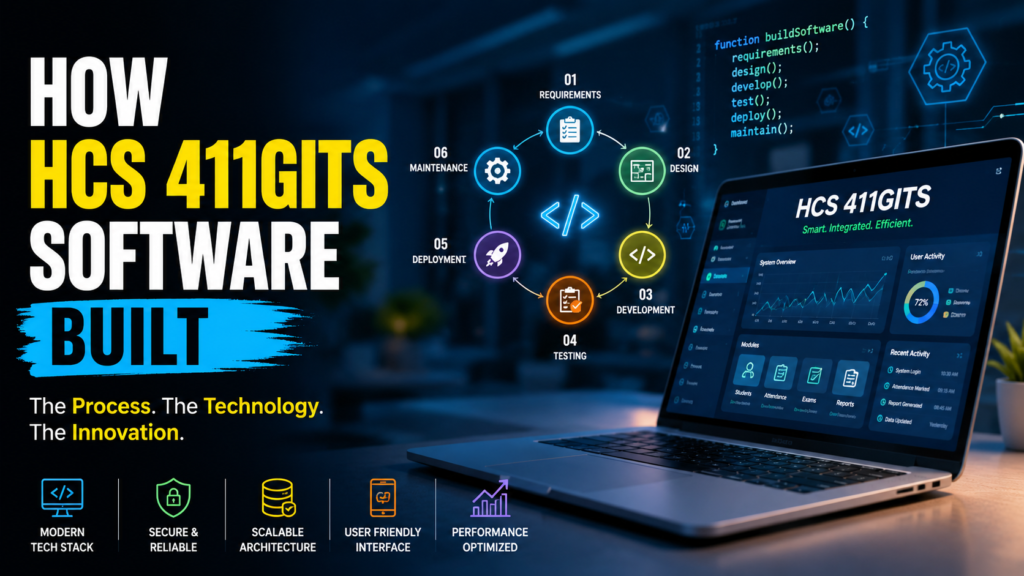
How HCS 411GITS Software Built
Understanding how hcs 411gits software built has become a topic of interest for developers, technology enthusiasts, and businesses looking to learn more about modern software development practices. While many software projects differ in their implementation, successful platforms generally follow a structured lifecycle that includes planning, architecture design, development, testing, deployment, and continuous improvement.
This guide explores how hcs 411gits software built from a software engineering perspective, explaining the possible development workflow, technologies, design principles, security practices, and maintenance strategies that contribute to creating reliable and scalable applications. Whether you are a beginner or an experienced developer, this article provides valuable insight into the development journey of a modern software system.
Understanding HCS 411GITS Software
HCS 411GITS software can be viewed as a structured software solution designed to solve specific operational or technical challenges. Like many professional software products, its development likely focused on performance, scalability, usability, and security from the earliest planning stages.
Modern software projects rarely begin with coding alone. Instead, they start by identifying user needs, business goals, and technical requirements. These foundational elements help ensure that every development decision supports the final product’s purpose while minimizing unnecessary complexity.
How HCS 411GITS Software Built from the Ground Up
When exploring how hcs 411gits software built, the first stage is requirement analysis. Developers gather project objectives, understand user expectations, and document functional and non-functional requirements. This phase establishes the roadmap for the entire project.
After gathering requirements, software architects create the overall system design. This includes selecting suitable programming languages, designing databases, defining APIs, planning security measures, and deciding how different components will communicate with each other. A well-designed architecture reduces future maintenance costs and improves long-term scalability.
The development process then moves into coding. Developers implement individual features while following coding standards, version control practices, and modular programming principles. This structured approach allows multiple developers to work efficiently on different components without causing conflicts.
Planning Before Development
Every successful software project begins with careful planning. Teams define project scope, expected features, estimated timelines, resource allocation, and technical risks before writing production code.
Planning also includes identifying target users and understanding how they will interact with the application. User-centered planning reduces unnecessary features while improving usability and customer satisfaction.
Proper planning makes it easier to manage budgets, prioritize tasks, and deliver updates on schedule throughout the software lifecycle.
Software Architecture and System Design
Software architecture forms the backbone of any professional application. A well-designed architecture separates responsibilities into independent modules, making the software easier to maintain and upgrade.
In understanding how hcs 411gits software built, scalable architecture likely played a major role. Modular development allows teams to improve individual components without affecting the entire system.
Database optimization, API integration, authentication mechanisms, and service communication are also essential architectural considerations that improve both performance and reliability.
Choosing the Right Technology Stack
Selecting an appropriate technology stack significantly influences software quality. Developers typically evaluate performance requirements, community support, scalability, security, and maintenance before choosing programming languages or frameworks.
Backend technologies manage business logic and databases, while frontend technologies create intuitive user interfaces. Together, they deliver a seamless user experience across multiple devices.
Cloud infrastructure, containerization, and modern deployment tools further enhance flexibility and simplify software management.
Database Design
Efficient database design ensures that information is stored securely while allowing fast retrieval of data. Proper indexing, normalization, and relationship management improve application speed and reduce resource consumption.
As software grows, database optimization becomes increasingly important for maintaining responsiveness under heavy workloads.
Coding Standards and Development Practices
Professional development teams follow strict coding standards to improve consistency and maintainability. Clean code is easier to understand, debug, and extend over time.
Version control systems enable developers to track changes, collaborate effectively, and restore previous versions whenever necessary. Regular code reviews also help identify potential bugs before software reaches production.
Reusable components and modular programming reduce duplicate code while simplifying future enhancements.
User Interface and User Experience
An application’s success depends heavily on its user experience. Developers focus on creating intuitive navigation, responsive layouts, and accessible interfaces that allow users to complete tasks efficiently.
Responsive design ensures compatibility across desktops, tablets, and smartphones. Consistent layouts, readable typography, and logical workflows improve usability while reducing the learning curve for new users.
User feedback often influences interface improvements throughout the software lifecycle.
Security Considerations During Development
Security is integrated throughout every development stage rather than added at the end. Strong authentication, encrypted communications, secure data storage, and access controls protect both users and business information.
Regular security testing identifies vulnerabilities before deployment. Developers also monitor software updates to address newly discovered security risks and maintain long-term protection.
Understanding how hcs 411gits software built also involves recognizing that cybersecurity has become a fundamental requirement for modern software systems.
Software Testing and Quality Assurance
Testing ensures that every feature performs as intended under different conditions. Multiple testing methods contribute to software reliability and overall user satisfaction.
Unit testing verifies individual components, while integration testing confirms that different modules communicate correctly. System testing evaluates the application as a complete product, and user acceptance testing validates that it meets business requirements.
Quality assurance teams continuously monitor defects, verify fixes, and confirm stability before each release.
Performance Optimization
Performance optimization improves loading speed, response time, and resource efficiency. Developers optimize algorithms, reduce unnecessary database queries, compress assets, and implement caching strategies to deliver faster performance.
Continuous monitoring helps identify performance bottlenecks that may appear as user traffic increases.
Deployment Process
Once testing is complete, developers prepare the software for production deployment. Deployment includes configuring servers, migrating databases, verifying infrastructure, and monitoring application health after launch.
Modern deployment pipelines automate many repetitive tasks, reducing human error while accelerating release cycles. Automated deployment also supports frequent software updates with minimal downtime.
Reliable backup and recovery procedures ensure business continuity in the event of unexpected issues.
Continuous Maintenance and Updates
Software development does not end after deployment. Continuous maintenance keeps applications secure, compatible, and competitive in changing technological environments.
Developers regularly fix bugs, improve performance, introduce new features, and strengthen security protections based on user feedback and evolving business requirements.
Ongoing maintenance extends software lifespan while ensuring long-term reliability and customer satisfaction.
Benefits of a Structured Development Process
Understanding how hcs 411gits software built highlights the value of following a structured software development lifecycle. Organized development improves code quality, reduces project risks, simplifies maintenance, and enables faster future enhancements.
Well-planned projects also improve collaboration between developers, designers, testers, and stakeholders, leading to more successful software releases.
Businesses benefit from higher reliability, stronger security, improved scalability, and lower long-term maintenance costs when development follows established engineering practices.
Conclusion
Learning how hcs 411gits software built provides valuable insight into the principles behind successful software engineering. From initial planning and architectural design to coding, testing, deployment, security, and continuous maintenance, every stage contributes to creating dependable software that serves users effectively.
Although every project has unique requirements, the core development methodology remains consistent across many modern applications. Organizations that invest in careful planning, quality assurance, scalable architecture, and continuous improvement are far more likely to deliver software that performs reliably and adapts to future demands.