The Hidden Risk Behind Every Bedside Curtain
Cross-contamination in hospitals is a hidden risk that is often overlooked. While obvious sources of infection, such as unwashed hands or contaminated medical equipment, are often overlooked in healthcare settings, bed curtains are not. The reality is that these privacy curtains are touched dozens of times a day by staff, patients, and caregivers, but their inspection standards are not as rigorous as door handles or bed rails.
Choosing hospital shower curtain systems offers a state-of-the-art solution to prevent these hidden pathways of germs in pediatric care environments. The primary objective of this detailed review is to understand the mechanisms of germ spread and provide facility managers with practical and operational guidelines to ensure a safe hospital environment.
Why Children Are More Vulnerable to Healthcare-Associated Infections
The risk of infection in children’s wards is much higher than in adults, mainly due to the children’s immune system. Children have low antibody reserves, which makes them susceptible to various pathogens. At the same time, children’s behavior is also different from adults; they touch things around them more, are not able to strictly follow the rules of frequent hand washing, and are also visited by parents and family members. Due to these characteristics of children, following the principles of Infection Prevention in pediatric wards becomes the first and most basic step.
What Cross-Contamination Actually Means Inside a Pediatric Ward
Simply put, cross-contamination is the transfer of germs from one surface, person, or object to another, often through indirect contact. This is different from direct transmission, as inanimate objects such as curtains become a pathway for germs to spread from one patient to another. To ensure cross-contamination prevention in a hospital environment, it is important to understand that bed curtains are at the center of multiple pathways for the spread of germs at the same time.
How Privacy Curtains Become High-Touch Surfaces
The frequency of touching curtains in daily hospital routines is surprisingly high. Nurses pull curtains during rounds, parents adjust them for children’s comfort, and cleaning staff touch them when preparing rooms. This constant contact makes the edges and folds of curtains the places where germs accumulate the most. Yet, while bed rails or dining tables are cleaned daily in the daily cleaning schedule, curtains are often overlooked.
Why Curtain Edges and Fold Areas Carry Higher Contamination Potential
Whenever a curtain is opened or closed, hands or gloves first touch its leading edge. This is why this particular zone becomes the biggest hotbed of germ contamination in the entire curtain.
Common Contamination Pathways Involving Curtains
The five main routes of transmission of germs around curtains are as follows:
- Staff-to-curtain transmission: Medical staff touch curtains after seeing a patient or without changing gloves, which transfers germs to the curtains
- Patient-to-curtain transmission: Children constantly touch curtains hanging near them while moving or playing in bed
- Caregiver-to-curtain transmission: Family members and visitors frequently touch curtains due to lack of knowledge of clinical hygiene principles
- Medical equipment-to-curtain transmission: Mobile X-ray machines, supply carts, or other equipment rub against curtain fabric while moving around the ward
- Other surface-to-curtain transmission: The bottom or side of a curtain constantly touches the bed frame or adjacent furniture surfaces
Why Reusable Curtain Systems Can Increase Contamination Risk
Reusable traditional cloth drapes hang in hospitals for long periods of time, accumulating dirt and germs from multiple patient cycles. The washing schedule for these drapes is often based on a fixed time of months or weeks, rather than when patients are discharged, creating a large safety gap between two patients. In addition, traditional cloth retains moisture for a long time, which provides a favorable environment for germs to survive and grow.
How Pediatric Disposable Cubicle Curtains Interrupt the Contamination Chain
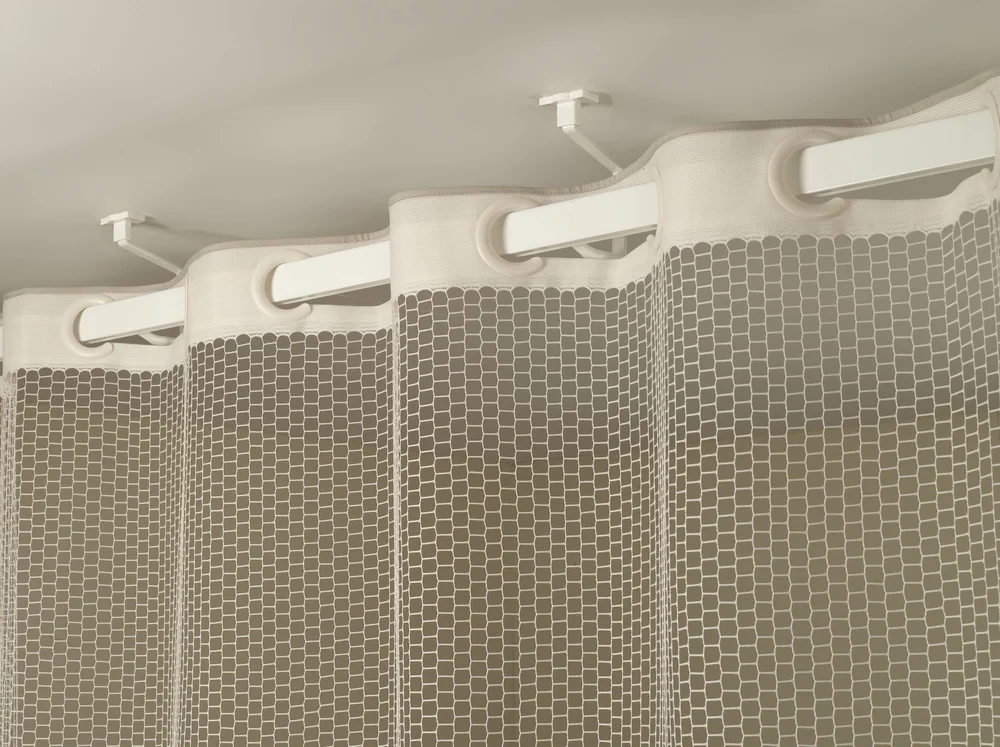
The only solution to break this germ chain is to replace the material itself, rather than relying on cleaning. When a patient is discharged, removing the old curtain and replacing it with a completely new one completely eradicates any accumulated germs. The use of Pediatric disposable cubicle curtains in sensitive pediatric areas blocks all five routes of germ spread at once.
Infection Prevention Tip: A complete curtain change after each patient is discharged is much safer than traditional curtain spot-cleaning, as it removes contaminated material from the ward rather than just cleaning the surface.
The Role of Disposable Curtain Systems Within a Broader Infection Prevention Program
Timely curtain changes should not be considered a hospital’s sole or exclusive safety measure, but rather an integral part of a hospital’s overall infection control program (such as hand hygiene, PPE protocols, and surface disinfection). Healthcare professionals always consider all elements of the environment as a whole, where disposable curtains serve as a strong and indispensable layer of the protective system.
Benefits for Environmental Services (EVS) Teams
Disposable systems greatly simplify the workflow of hospital cleaning staff (EVS):
- Eliminate laundry hassle: Staff no longer need to keep laundry records, weigh laundry, and carry dirty items
- Save time: Cleaning supervisors’ time is spent directly on ward maintenance rather than coordinating laundry
- Reduce errors: The simpler the work procedure, the less likely it is that staff will skip protocols or make mistakes under time pressure
Faster Curtain Replacement After Patient Discharge
Disposable systems allow for a new curtain to be installed within seconds of a patient leaving, and staff do not have to wait for the curtains to return from the laundry. The biggest advantage is that the dangerous time (contamination window) during which a contaminated curtain could remain hanging until a new patient arrives is completely eliminated. This quick replacement system of Disposable Hospital Curtains in pediatric wards keeps hospital operations running without interruption.
Reducing Pathogen Transfer Between Pediatric Patients
When new patients are admitted to the same bed in succession, the risk of the first patient’s germs being transferred to the next child is very high. If the drapes are not changed, pathogens from the first patient’s cough, touch, or contamination remain on the fabric and can make the new, vulnerable child sick. The process of completely changing the material reduces the chances of this transfer to a measurable extent.
Supporting Hospital Cleaning Workflows Without Disrupting Daily Operations
The process of changing disposable curtains fits into a hospital’s existing room-turnover routine, requiring no separate procedure. It places no additional burden on staff, and allows hospital management to prepare their beds on a consistent and predictable schedule, rather than having to deal with uncertain laundry deliveries.
Material Characteristics That Help Reduce Contamination Risk
The material science of modern disposable curtains plays a significant role in preventing germs:
- Non-woven construction: Unlike traditional woven fabrics, they do not have the fine holes or threads where germs can hide
- Moisture resistance: This material does not absorb liquids and water, which prevents the growth of bacteria
- Reduced porosity: Due to the smooth surface, any stains or dirt on it can be seen from a distance and replaced immediately
Procurement Considerations When Selecting Disposable Hospital Curtains
Hospital purchasing teams should review the following objective points when selecting a vendor:
1. The chemical composition of the material and its ability to block moisture.
2. Curtain hardware compatibility with ceiling tracks already installed in the hospital.
3. Consistent availability of stock with the supplier for pediatric wards with high turnover.
4. Manufacturer’s certified documents for legal audits and hygiene protocols.
Compliance With Hospital Hygiene Protocols
Any hospital’s internal hygiene manual and audit standards require that the process of changing drapes be subject to a formal documented policy. When and how drapes are to be changed should be part of the hospital’s infection control policy guide, rather than being left to the discretion of staff, so that the facility’s records are clear at the time of inspection.
Documentation and Replacement Planning
Keeping regular records of curtain change dates, frequency, and responsible employee strengthens a hospital’s quality management system. If these documents are incomplete at the time of an audit or an infection investigation, the entire hospital’s performance becomes questionable. Therefore, managers should have contingency plans in place for routine discharges as well as for unexpected events (such as blood stains, vomiting, or isolation ward requirements).
Common Mistakes Hospitals Make That Increase Cross-Contamination Risk
Some common management errors that increase cross-contamination include:
- Deeming curtain changes unimportant on busy days and prioritizing other cleaning tasks
- Reusing old curtains without changing them when a new patient is admitted to the same bed to save time
- Not providing new cleaning staff (EVS) with specific training on the germ hazards of curtains and how to remove them
- Not including curtain inspections in the hospital’s monthly or annual environmental hygiene audits
- Deliberately delaying staff from changing curtains due to stock shortages
Future Trends in Infection Prevention Curtain Systems
There is a growing trend in the medical sector for smart materials that have both disposability and permanent antimicrobial properties. In addition, manual logbooks are now being replaced by barcodes and digital tracking systems, where the life of each curtain and its replacement time are automatically monitored by a computerized system, eliminating the possibility of human error.
A Practical Checklist Before Implementing Disposable Curtain Systems
Before implementing a new disposable system, facility managers should complete this checklist:
- Has the hospital identified the wards with the highest patient turnover and risk of contamination?
- Is the drape change protocol tied to patient discharge rather than just calendar dates?
- Has EVS staff been fully trained on the transmission pathways of drapes?
- Is inventory planning based on actual unit needs rather than hospital-wide averages?
- Is a system in place to digitally or manually record drape changes for audit purposes?
- Does the selected material meet the hospital’s moisture barrier standards?
Making Curtain Changeover a Deliberate Part of Infection Prevention
Hospital curtains are not just a way to decorate a room or provide privacy, they are a major and silent pathway for the spread of germs. Making their timely and regular replacement a permanent part of a hospital’s infection control program can ensure patient safety. Disposable systems provide far more sustainable results than traditional cleaning by resetting all germ pathways at once.
To maintain this operational hygiene and efficiency, facilities often turn to best-in-class options, such as the On the Right Track Pediatric Disposable Cubicle Curtains, which are a great example of putting this modern safety principle into practice. Making curtain management a regular and documented process makes children’s hospitals legally safe and clinically sound.
Frequently Asked Questions
1. How quickly can pathogens accumulate on a hospital privacy curtain?
According to medical literature, curtains begin to accumulate germs within hours of hanging, and as contact between staff and patients increases, the number and density of germs increases rapidly.
2. Should curtains be changed after every single patient, or only periodically?
From a safety perspective, the best approach is to tie curtain changes to patient discharge and visible soiling of the material, not just to a fixed calendar schedule.
3. Are disposable curtains equally effective in isolation and non-isolation pediatric units?
Disposable curtains are useful in both settings, but in isolation units (where infectious diseases are more prevalent), their immediate change after each patient should be much more stringent and mandatory than in general wards.
4. How do hospitals train staff to recognize curtain-related contamination risks?
Hospitals regularly train their staff on visual cues for high-touch zones, proper methods for touching curtain edges, and inspecting curtains during daily environmental rounds.
5. What role does curtain material play in reducing contamination compared to changeover frequency alone?
The composition of the material and the frequency of replacement both work together. Nonwoven materials prevent germs from adhering, while timely replacement breaks the cycle of their constant spread. No single factor is sufficient on its own.