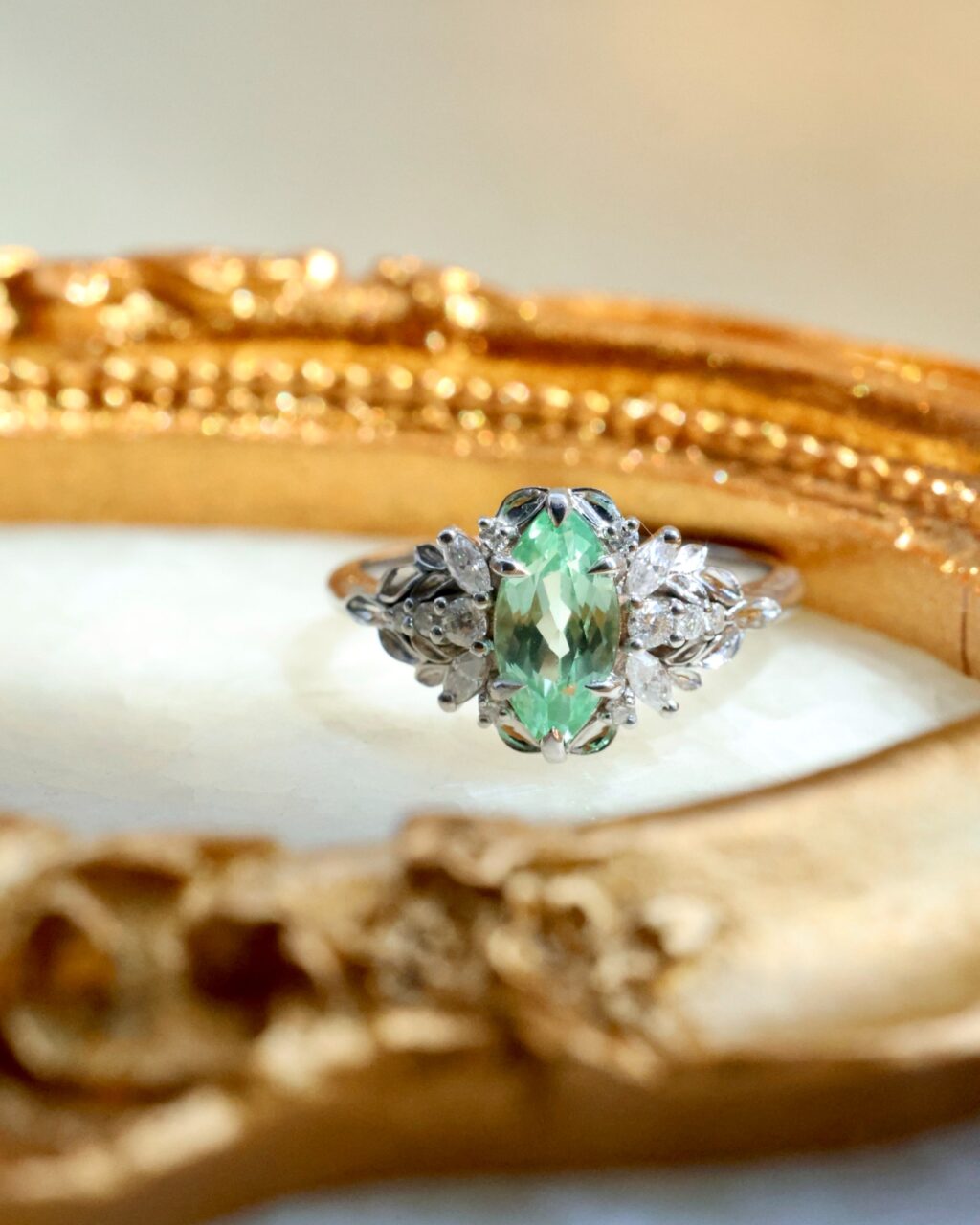
Two rings can look almost exactly the same in an online photo and still be made very differently.
One might be made individually by a jeweler who chooses the gemstone, adjusts the setting, sets the stones, and finishes the piece by hand. Another might be one of thousands of identical rings made using standardized molds and automated production.
There’s nothing wrong with either approach, and both can use real gold and genuine gemstones. The difference is in how the jewelry is designed and produced.
Understanding what handcrafted fine jewelry actually means can help you look past the product photos and think about the craftsmanship, customization, quality, and overall value before you buy.
What Is Handcrafted Fine Jewelry?
Handcrafted fine jewelry generally means a piece is made with significant involvement from skilled jewelers or artisans rather than being produced entirely through high volume automated manufacturing.
Fine jewelry can be made with materials like gold, platinum, diamonds, sapphires, emeralds, opals, and other natural or lab created gemstones. The term “handcrafted” refers more to how the jewelry is made, while “fine jewelry” usually describes the materials and construction of the piece.
And handcrafted doesn’t necessarily mean a jeweler is sitting there making every tiny part with traditional hand tools. Modern jewelry making can still involve CAD design, casting, specialized equipment, and other technology.
What really matters is how much skilled human involvement goes into the process and how much individual attention the piece receives along the way.
How Is Handcrafted Jewelry Made?
Production methods vary between jewelers.
A handcrafted piece may begin with a sketch, an existing design, or a customer’s idea. The jeweler then develops the proportions, selects appropriate materials, and prepares the piece for production.
Depending on the design, the process can include:
- Designing the piece
- Selecting gemstones
- Preparing or casting the metal
- Shaping and assembling components
- Setting gemstones
- Polishing and finishing
- Inspecting the completed jewelry
For custom pieces, additional adjustments may be made specifically for the customer’s chosen gemstone, ring size, or design preferences.
What Is Mass-Produced Jewelry?
Mass produced jewelry is made with efficiency and consistency in mind. Instead of creating each piece individually, manufacturers use standardized designs that can be reproduced over and over with very little variation.
This can involve standardized molds, automated manufacturing, set gemstone sizes, repeated settings, assembly line production, and larger production runs.
That doesn’t automatically mean mass produced jewelry is low quality. A well managed manufacturer can produce consistent pieces at scale. The main difference is that the process is built around efficiency and repeatability rather than individual customization or hands on attention to each piece.
Handcrafted vs Mass-Produced Jewelry
The clearest differences appear in production scale, customization, and the amount of individual attention given to each piece.
Handcrafted Jewelry
Handcrafted jewelry often provides:
- Greater design flexibility
- More gemstone selection options
- Individual finishing
- Custom sizing or proportions
- Opportunities for personalization
- Smaller production quantities
Mass-Produced Jewelry
Mass-produced jewelry typically prioritizes:
- Consistency
- Faster production
- Larger inventory
- Standardized designs
- Lower production costs
Neither production method alone determines whether a piece is good or bad.
The better question is whether the method is appropriate for the jewelry you’re buying.
Why Does Craftsmanship Matter?
Fine jewelry is usually something you buy with the intention of wearing it for years, so how a piece is made matters just as much as how it looks.
Take an engagement ring, for example. Small details in the construction can make a real difference when you’re wearing it every day. The jeweler needs to think about how securely the gemstone is set, where the prongs are placed, the thickness of the band, the height of the setting, the proportions of the stone, the finish, and how comfortable the ring is to wear.
A lot of these details aren’t obvious when you’re looking at a product photo online. That’s why it’s worth paying attention to how a jeweler talks about the construction and wearability of their pieces, not just the design.
This is one reason buyers comparing handcrafted fine jewelry should look beyond appearance and ask how a piece is designed, made, and finished.
Does Handcrafted Mean One of a Kind?
Not necessarily.
A handcrafted jewelry brand can have an established collection and still make each piece individually when it’s ordered. So yes, several customers might end up with the same basic ring design.
The difference is that handcrafted or made to order jewelry can often give you more room to personalize the details. Depending on the jeweler, you may be able to choose the gemstone, metal, stone shape, ring size, setting, or even add an engraving.
Fully bespoke jewelry takes things a step further. Instead of starting with an existing design, the jeweler creates a completely new piece around one customer’s ideas and preferences.
Gemstone Selection Can Make a Major Difference
Some gemstones naturally vary considerably from one stone to another.
Examples include:
- Moss agate
- Opal
- Parti sapphire
- Salt and pepper diamonds
- Tourmaline
- Emerald
With these gemstones, selecting the individual stone can become an important part of the design process.
A standardized setting may not always highlight the individual characteristics of every gemstone equally well.
Handcrafted production can allow the design or setting to be adjusted around the stone rather than forcing every stone into exactly the same visual formula.
For independent information about gemstone characteristics and jewelry materials, the Gemological Institute of America (GIA) provides educational resources for consumers.
How Can You Identify Quality Craftsmanship?
The word “handcrafted” alone isn’t proof of quality.
Buyers should look for evidence in the finished piece.
Useful quality indicators include:
Secure Stone Setting
Gemstones should sit securely within the setting, with appropriately positioned prongs or other protective elements.
Balanced Proportions
The center stone, band, side stones, and setting should work together visually and structurally.
Clean Finishing
Surfaces should be properly polished or intentionally textured, with attention paid to areas that may not be immediately visible.
Appropriate Construction
The design should account for the gemstone’s properties and how the jewelry will be worn.
Consistency
Details such as pavé stones, prongs, and decorative elements should appear deliberate and properly aligned.
These factors tell you more about craftsmanship than the production label alone.
Is Handcrafted Jewelry More Durable?
Not automatically.
Durability depends on several variables, including:
- Metal
- Gemstone
- Setting
- Design
- Construction
- Wearer’s lifestyle
A poorly designed handcrafted ring can be less durable than a well-designed mass-produced one.
However, individual production can allow a jeweler to consider the specific gemstone and intended use when creating the setting.
For engagement rings and everyday jewelry, this can be particularly valuable.
Why Is Handcrafted Jewelry Often More Expensive?
Handcrafted jewelry can cost more because each piece may require more hands on work. Instead of producing thousands of identical rings, a jeweler might spend extra time choosing the right gemstone, making adjustments to the design, setting the stones, finishing the piece, and communicating with the customer.
That extra work can be reflected in the price, along with the cost of the materials, gemstone quality, design complexity, smaller production runs, and any customization.
That said, handcrafted jewelry isn’t automatically more expensive than mass produced luxury jewelry. A well known brand can have significantly higher prices because of its name, marketing, retail locations, and other overhead costs. The price of a piece doesn’t always tell you how it was made.
Customization Is One of the Biggest Differences
One of the biggest benefits of artisan made jewelry is having more flexibility with the design. Instead of choosing from a fixed selection, you may be able to make changes to an existing ring or work with a jeweler to create something completely new.
Depending on the brand, you might be able to change the center gemstone, choose a different stone shape, pick your preferred gold color or platinum, adjust the band proportions, add accent gemstones, change the setting, or include an engraving.
This can be especially useful when you’re shopping for an engagement ring. Rather than settling for a standard design, you can make choices that fit your style and create a ring that feels more personal.
Is Handcrafted Jewelry More Sustainable?
Production method alone doesn’t determine sustainability.
A handcrafted piece isn’t automatically sustainable, just as mass-produced jewelry isn’t automatically irresponsible.
Buyers should separately consider factors such as:
- Metal sourcing
- Recycled precious metals
- Gemstone sourcing
- Production location
- Manufacturing practices
- Longevity and repairability
Responsible production depends on the entire supply chain, not simply whether a product is described as handmade.
Frequently Asked Questions
What does handcrafted fine jewelry mean?
Handcrafted fine jewelry combines precious materials with significant skilled human involvement during production. It may use modern technology alongside traditional jewelry-making techniques.
Is handcrafted jewelry better than mass-produced jewelry?
Not automatically. Quality depends on materials, design, construction, stone setting, and finishing. Handcrafted production can offer greater customization and individual attention, while mass production can provide consistency and efficiency.
Is handmade jewelry the same as handcrafted jewelry?
The terms are often used interchangeably, but their meaning can vary between brands. Buyers should look for information explaining the actual production process rather than relying on terminology alone.
Why does handcrafted jewelry cost more?
It can require more skilled labor, individual gemstone selection, manual finishing, smaller production runs, and customization. However, pricing also depends on materials, gemstone quality, and brand positioning.
How can I tell if handcrafted jewelry is high quality?
Look at the quality of the setting, proportions, finishing, materials, gemstone information, and overall construction. A reputable jeweler should also be able to explain how the piece is made.
Final Thoughts
The biggest difference between handcrafted and mass-produced fine jewelry isn’t simply whether someone used their hands.
It’s the production philosophy.
Mass production focuses on efficiently reproducing standardized designs. Handcrafted production typically allows greater individual attention, flexibility, gemstone selection, and customization.
Neither method guarantees quality on its own.
For buyers, the most useful approach is to examine the materials, construction, design, craftsmanship, and transparency behind each piece.
That’s what ultimately determines whether jewelry is worth wearing—not the label attached to the production method.